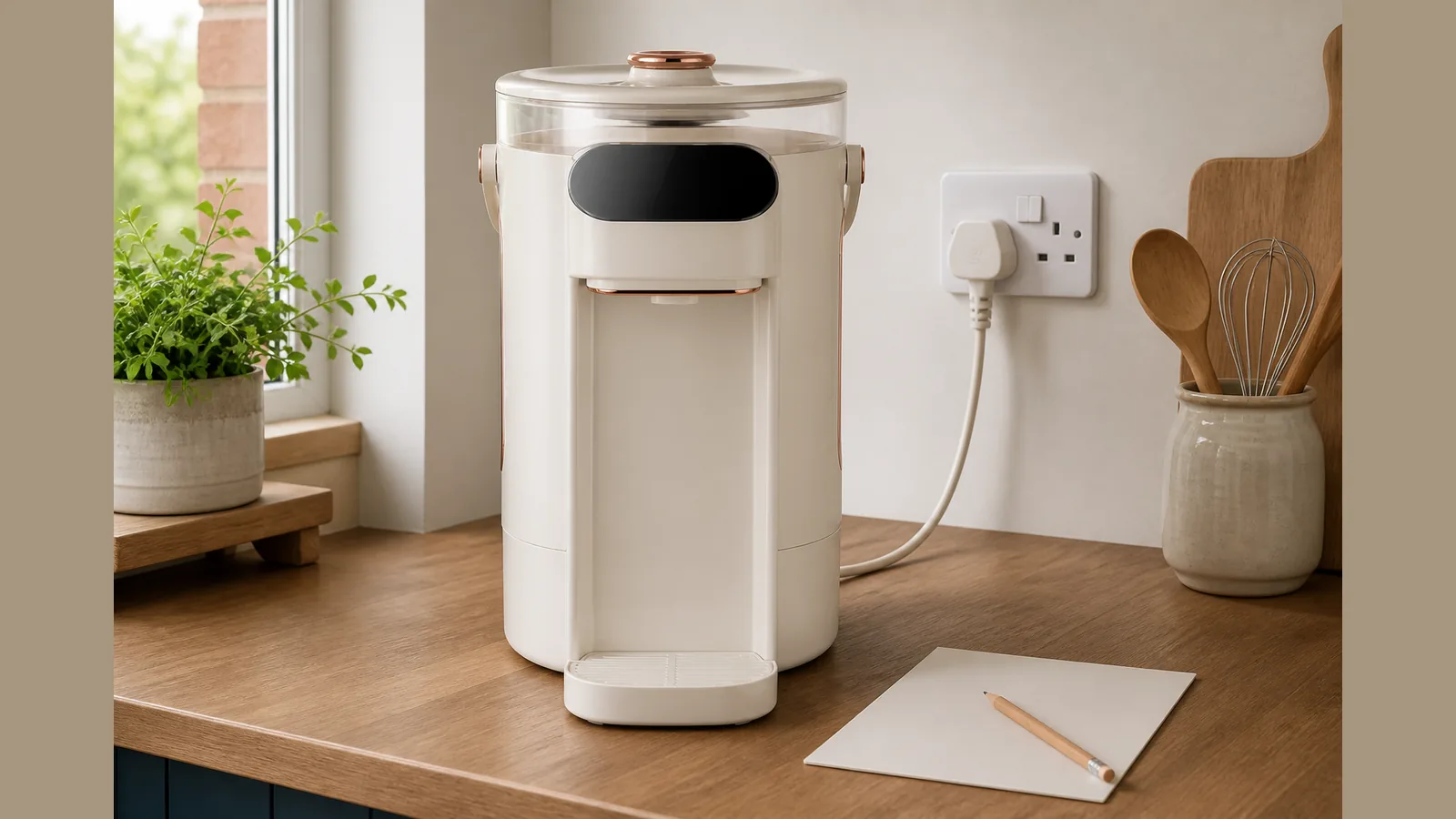
Electric Kettle Not Boiling UK: Safe Checks Before You Replace It
If your electric kettle not boiling uk checklist starts with power at the wall, firm base contact, boil-dry or automatic shut-off lockouts, hard-water scale and overloaded sockets, you will usually find a safe external cause before you assume the kettle has failed.
Direct answer: start with power, base contact, boil-dry lockouts, scale and overloaded sockets
Unplug first, then check the obvious external points only. Confirm the socket is live with another appliance, reseat the kettle firmly on its base, and look for a boil-dry or automatic shut-off state after an empty or interrupted boil. In hard-water areas, scale can slow boiling and distort how performance feels. On shared kitchen strips, high-wattage loads can also trip a 13A fuse, which can look like a kettle that will not boil.
Step sequence UK homes: socket, RCD, 13A strip load, lid/switch, heavy limescale
- Unplug the kettle and try a known-good wall socket rather than a crowded strip.
- If an RCD or kitchen circuit has tripped, reset only after removing other heavy loads and checking nothing is wet or damaged externally.
- Avoid sharing a 13A strip with other high-wattage appliances while testing; overloads can open the fuse and stop the boil mid-cycle.
- Check the lid is closed as intended and the switch or controls are fully engaged after seating the kettle on the base.
- Inspect for heavy limescale on the element or floor of the jug; thick scale can delay a proper boil without proving an internal fault.
When to stop and seek repair/replace vs DIY
Stop DIY checks as soon as you smell burning, see scorch marks, notice a cracked jug or base, feel unusual heat on the plug or lead, or find the kettle will not stay powered after simple reseating. At that point, unplug it and seek repair or replacement through a qualified route rather than opening the appliance. External cleaning of accessible scale and confirming a live socket are reasonable; internal electrical work is not.
Hard-water scale as a common performance drag (not a diagnosis guarantee)
Across much of the UK, hard water leaves mineral scale that can slow boiling and make a kettle seem underpowered. That is a common performance drag, not a guaranteed diagnosis of failure. Descale only with the method your kettle instructions allow, and treat persistent no-heat or instant cut-out after cleaning as a reason to stop and seek repair or replace rather than keep experimenting.
Who should not open the base themselves
Anyone without relevant electrical competence should not open the base, cut into wiring, bypass safety cut-outs or attempt element repairs. Household checks end at unplug, external inspection, socket and strip load, lid and switch position, and visible scale. Opening the base risks shock, further damage and voided support pathways.
Soft CTA only after problem solved framing
Once you have ruled out power, base seating, lockouts, strip overload and heavy scale, compare a known-good replacement only if the kettle still will not boil. For model details, including listed boil-dry protection and automatic shut-off, see the Current product details for the Ninja Perfect Temperature Smart Kettle.
FAQ
Why is my kettle not switching on in the UK?
Start with a live wall socket, a firmly seated base and a switch or control that has not been left in a cut-out state after boil-dry protection or automatic shut-off. If the plug fuse or a shared 13A strip has opened under load, the kettle can look completely dead until that is corrected.
Why does the kettle trip a fuse when boiling?
High-wattage kettles on shared strips can trip 13A fuses in UK kitchens when other appliances draw current at the same time. Test on a dedicated wall socket with the strip unloaded before assuming the kettle itself is faulty.
Why does the kettle click off immediately?
Immediate cut-off can follow poor base contact, an empty or under-filled jug triggering boil-dry protection or automatic shut-off, or a control that never fully latches. Unplug, cool, reseat and retry with adequate water; if it still cuts out at once, stop and seek repair or replace.
Is scale enough to explain an electric kettle not boiling?
Scale can slow boiling and distort perceived performance in hard-water UK regions, but it does not prove the cause on its own. Use it as one check in the sequence, not a final diagnosis.