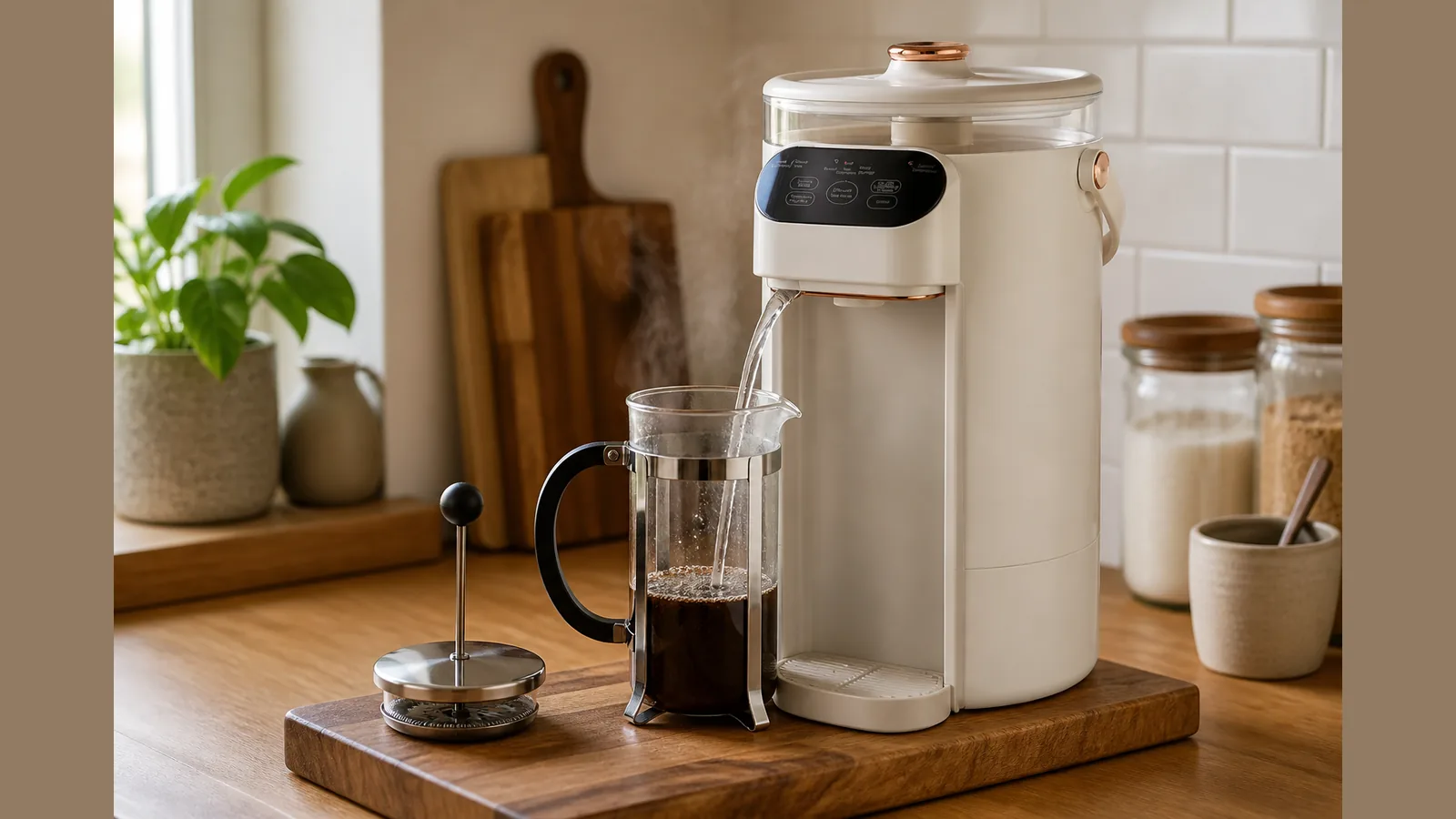
French Press Water Temperature UK: A Simple Kettle Setting Guide for Cafetière Coffee
For french press water temperature uk brewing, aim near the specialty coffee window—typically below a hard rolling boil—then adjust slightly hotter or cooler to taste. Full boil water is hotter than many public coffee guides suggest for infusion methods such as the cafetière.
Direct answer: aim near specialty brew window below a hard rolling boil; adjust to taste
Heat kettle water to a point just under a full rolling boil, wait briefly if you only have a boil-only kettle, then pour onto your grounds. Taste over a few mornings: if the cup tastes harsh or overly bitter, try a slightly cooler setting next time; if it tastes flat or under-extracted, nudge the water a little hotter within the commonly cited specialty range.
SCA-style public range cue (~92–96°C commonly cited for brew methods)
Public coffee guidance often points to brew water around 92–96°C as an SCA-style reference range for methods such as pour-over, and the same window is a useful cue when you set a kettle for French press or cafetière coffee. An ultimate guide to water temperature in pour-over coffee cites that SCA-recommended band. UK coverage of temperature-control kettles similarly notes that coffee is often brewed cooler than a full boil—for example, The Independent’s temperature-control kettle round-up cites around 95°C as a common coffee optimum, while Which? on variable-temperature kettles discusses brew temperatures that differ from a hard boil. Treat these figures as external guidance for your kettle setting, not as a product certification.
UK cafetière morning routine steps
A simple weekday cafetière sequence keeps temperature consistent without guessing:
- Measure your usual coarse grind into a warmed cafetière.
- Set the kettle near the 92–96°C public cue (or about 95°C if you prefer a single mid-range target), rather than a full rolling boil.
- Pour steadily to wet all the grounds, then top up to your normal fill line.
- Steep for your usual few minutes, plunge gently, and pour.
- Note the taste once; tweak the kettle setting by a small step the next morning if needed.
Keeping the same grind, dose and steep time while you change only water temperature makes it easier to judge what works for your beans.
Why variable-temperature kettles reduce cool-down guessing
With a boil-only kettle you often wait for the roar to settle, then hope the water has cooled into a sensible brew band. A variable-temperature kettle lets you choose a target in that commonly cited window and heat straight to it, which cuts the cool-down guesswork and keeps weekday cafetière water more repeatable. Live product information for the Ninja Perfect Temperature Smart Kettle mentions French press and cafetière temperature-control use cases among its everyday brewing contexts.
Who should not upgrade: instant-coffee-only households
If everyone at home only makes instant coffee with freshly boiled water, a temperature-control kettle is unlikely to change the routine enough to justify an upgrade. Stick with a simple boil-and-pour kettle until you regularly brew ground coffee in a cafetière or similar immersion method and care about matching a specialty-style water window.
Soft CTA
If you already brew French press or cafetière coffee and want fewer cool-down guesses each morning, check the current Ninja Perfect Temperature Smart Kettle details for temperature-control options suited to that routine.
FAQ
What is the best kettle temperature for French press in the UK?
Public specialty guidance commonly cites roughly 92–96°C for brew water, with around 95°C often mentioned as a practical midpoint versus a full boil. Start there for cafetière water temperature, then adjust to taste.
Is French press coffee temperature the same as pour-over?
Many public guides discuss a similar mid-90s Celsius band for several brew methods. Your grind, dose and steep time still matter, so use the range as a kettle cue rather than a fixed rule.
Do I need a variable-temperature kettle for cafetière coffee?
No. You can boil and briefly cool water by eye. A variable-temperature kettle mainly removes that waiting-and-guessing step if you brew immersion coffee often.