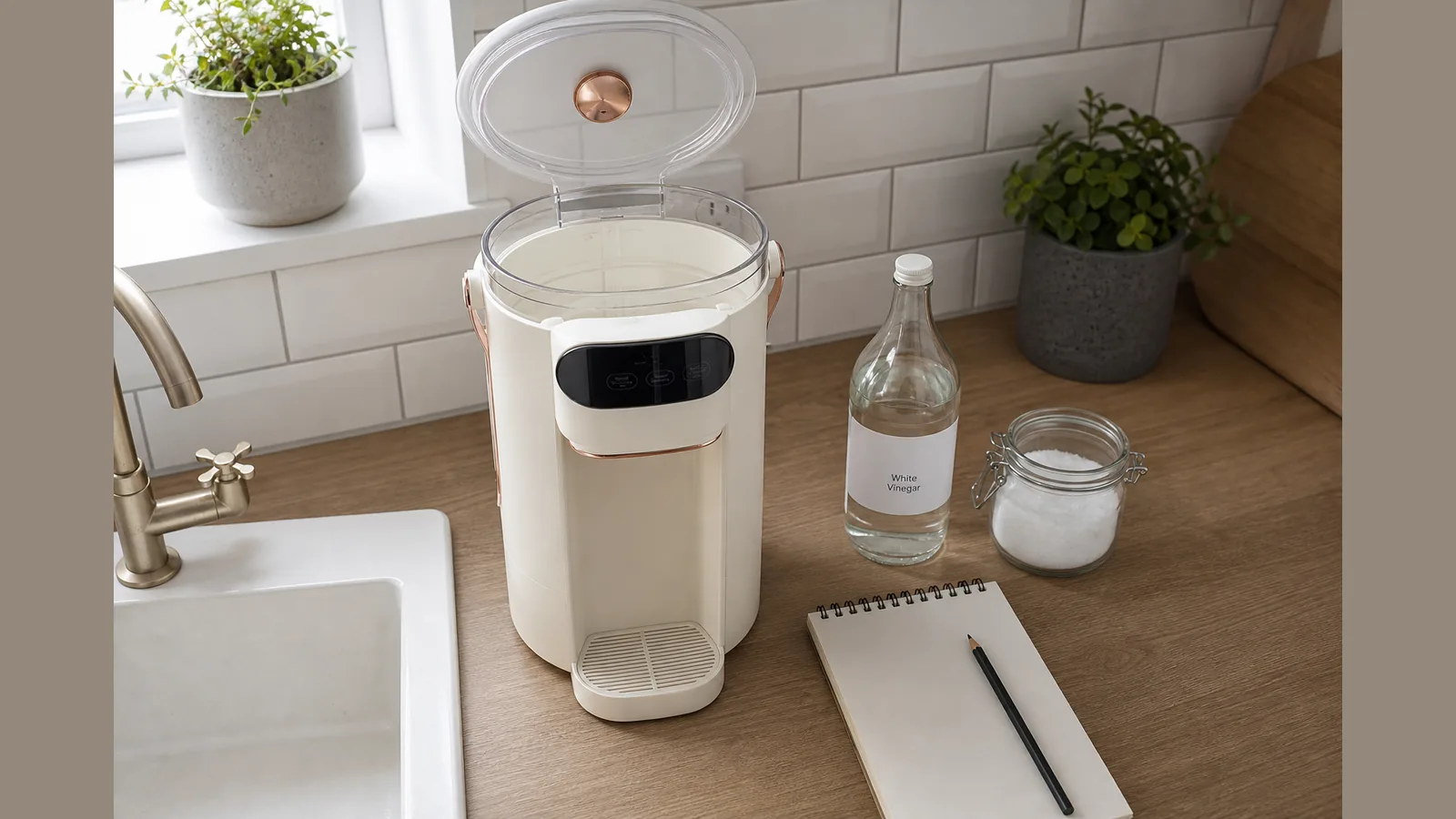
How to descale electric kettle uk: vinegar, Citric Acid and a Hard-Water Routine
How to descale electric kettle uk homes usually means using a mild acid such as distilled white vinegar or citric acid to dissolve limescale, then rinsing thoroughly and following your kettle maker’s permitted-cleaner guidance rather than inventing your own chemicals.
Direct answer: mild acid dissolves limescale; follow maker guidance and rinse well
Limescale is mineral build-up from hard water. Mild acids help loosen and dissolve it so you can rinse it away. Which? documents vinegar and citric-acid descaling methods for UK kettles, and BBC Good Food’s kettle descaling guide outlines practical distilled white vinegar and citric-acid workflows. Always check your own manual first for what is allowed on your model, then rinse until any taste or smell has gone.
UK hard-water cue: South East, Midlands and similar areas need more frequent descaling
If you live in a hard-water area—often including parts of the South East, the Midlands and similar regions—you may notice chalky deposits, cloudiness or slower heating cues sooner. UK hard-water guidance comparing vinegar and citric acid for kettle descaling is a useful planning reference, but how often you descale should follow visible scale, taste or smell cues and your maker’s advice—not a fixed calendar invented for a particular product.
Use more frequent checks where your tap water is hard; softer-water households may need to descale less often. The aim is to keep the interior free of heavy deposits without guessing intervals that your manual does not set.
Step checklist: vinegar method vs citric acid method
Vinegar method (typical household workflow)
- Unplug the kettle and empty it. Remove any removable filter if your model has one, following the manual.
- Add a mix of distilled white vinegar and water as described in reputable UK guidance such as Which? tips on removing limescale or BBC Good Food’s descaling steps—do not exceed fill marks.
- Leave to soak or gently heat only if your manual allows that step for vinegar solutions; never leave an unattended appliance boiling beyond normal use.
- Empty, rinse several times with fresh water, and boil clean water and discard if needed until the vinegar smell has gone.
- Refit any filter only after it has been cleaned and rinsed as the maker directs.
Citric acid method (typical household workflow)
- Unplug, empty, and remove a washable filter if fitted.
- Dissolve food-grade citric acid in water following the ratios in public UK guidance such as citric acid versus vinegar hard-water advice or the BBC Good Food citric-acid workflow—again respecting the kettle’s maximum fill level.
- Soak or heat only as your manual permits for citric-acid descalers.
- Empty, rinse thoroughly, and finish with clean water boils and discards until no residue taste remains.
- Replace the filter when clean and dry enough to refit.
Choose vinegar or citric acid based on smell preference, what your manual allows, and what you already have at home. Neither method should replace a manufacturer-approved descaler if your manual specifies one.
Filter rinse cadence and when to stop if damage is visible
Many UK electric kettles include a removable scale filter that benefits from regular rinsing under the tap and an occasional soak in the same mild descaling solution you use for the jug, if the manual says that is safe. Rinse the filter whenever you notice grit or white flakes in poured water, and clean it as part of each full descaling session.
Stop and seek advice or service if you see cracked plastic, damaged heating-plate coatings, loose parts, leaking seals, frayed flexes or scorched bases. Descaling is for mineral deposits—not a repair for worn or unsafe hardware. If the appliance looks unsafe, do not keep using it.
Who should not improvise with bleach or harsh chemicals
Do not use bleach, oven cleaner, abrasive powders meant for other surfaces, or unnamed “strong” chemicals inside a kettle. They can damage finishes, leave hazardous residues and are outside normal food-contact cleaning. Stick to vinegar, citric acid or a descaler your manual names, and always rinse well.
This article does not claim health benefits from descaling, and it does not make warranty statements. Warranty terms and permitted cleaners are defined only in your product documentation.
Soft CTA to temperature-control kettle product page
If you are reviewing a temperature-control electric kettle for a UK kitchen—including capacity and day-to-day use details—see the current product details for the Ninja Perfect Temperature Smart Kettle and still follow that model’s own care leaflet for descaling products and steps.
FAQ
Is vinegar or citric acid better for UK hard water?
Both are mild-acid options covered in UK public guidance. Citric acid often leaves less lingering smell; vinegar is widely available. Your manual’s permitted cleaners come first.
How often should I descale in hard-water areas?
Descaling frequency depends on your water hardness and how quickly deposits appear. Check more often in hard-water regions such as parts of the South East and Midlands, and descale when you see scale, flakes or lingering off-tastes—without treating any invented interval as a product claim.
Can I use bleach to remove limescale from a kettle?
No. Avoid bleach and other harsh chemicals. Use mild acid methods from trusted UK guidance or a cleaner your manufacturer allows, then rinse thoroughly.
Should I follow the kettle manual even if online steps differ?
Yes. Online vinegar and citric-acid workflows are general household methods. Always defer to your specific kettle manual for permitted cleaners, fill levels and whether heating a descaling solution is allowed.